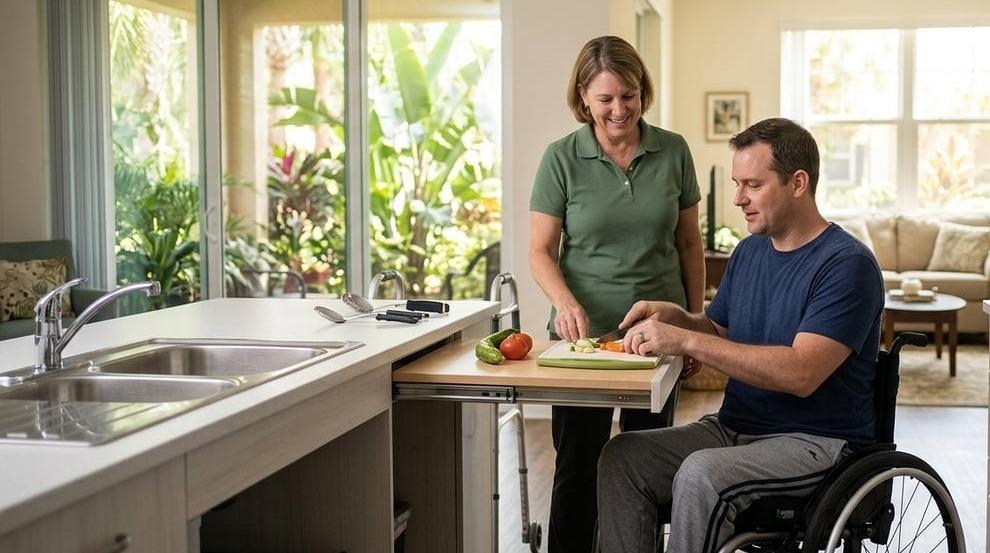
Going home after rehabilitation is something most patients and families look forward to for a long time. It can also raise hard questions. Will the skills practiced in therapy hold up in a real kitchen, a real bathroom, or a busy grocery store? Community reintegration is the part of rehabilitation that answers those questions by carrying therapy gains into everyday settings: personal care, household routines, appointments, and time out in the community.
At NeuLife Rehabilitation in Mt Dora, Florida, this stage of recovery is part of the plan. NeuLife works with adults recovering from traumatic brain injury, spinal cord injury, complex orthopedic injuries, and neurological disorders, and for many of them the move home calls for coordinated help with movement, thinking, communication, and emotions all at once. NeuLife's team includes community reintegration specialists who focus on exactly this transition.
Community reintegration is the gradual process of using new or relearned skills safely and consistently at home and in public. That can mean cooking a meal, keeping track of medications, getting dressed, speaking up for yourself, moving around the house safely, getting to appointments, or joining social and recreational activities.
After a brain injury, spinal cord injury, complex orthopedic injury, or neurological disorder, some changes are easy to see and others aren't. Physical strength may come back before stamina does. Walking short distances may return while attention, memory, or planning still lag behind. So the transition home depends on more than exercise. It needs therapy tied directly to the routines and responsibilities each person wants back.
Confidence is part of it too. A task that went well in a therapy session can feel very different at home, where there are distractions, fatigue, stairs, clutter, and stress. Making breakfast, for example, involves standing, reaching, following steps in order, and remembering to turn off the stove. Repetition and support from several therapy disciplines help people build strategies that hold up outside the facility.
The transition from facility to home usually happens in stages. Early therapy tends to focus on stability, strength, mobility, communication, and basic self-care. Later, goals move toward everyday living: problem solving, balance during household tasks, safe transfers (moving between a bed, chair, toilet, or car), and outings in the community.
Emotional adjustment comes along with it. Frustration, grief, anxiety, and uncertainty are common as people compare their abilities now with life before the injury. Those feelings are normal, and good rehabilitation planning makes room for them while skills and routines keep developing.
Preparing for home often means spotting barriers early, such as stairs, low endurance, trouble organizing the day, or changes in judgment and processing speed. The team may also help referral partners and loved ones understand how much support will be needed after discharge. Recommendations might include grab bars, a shower chair, clear pathways for a wheelchair, written reminders, or a simpler medication routine. No program can promise a timeline or a result, but with individualized post-acute rehabilitation, many people make real progress toward safer daily living and more time in their community.
NeuLife Rehabilitation is a residential post-acute program at 2725 Robie Ave, Mt Dora, FL 32757, serving adults with catastrophic injuries and complex conditions. Each service is tied to how a person will function at home and in the community.
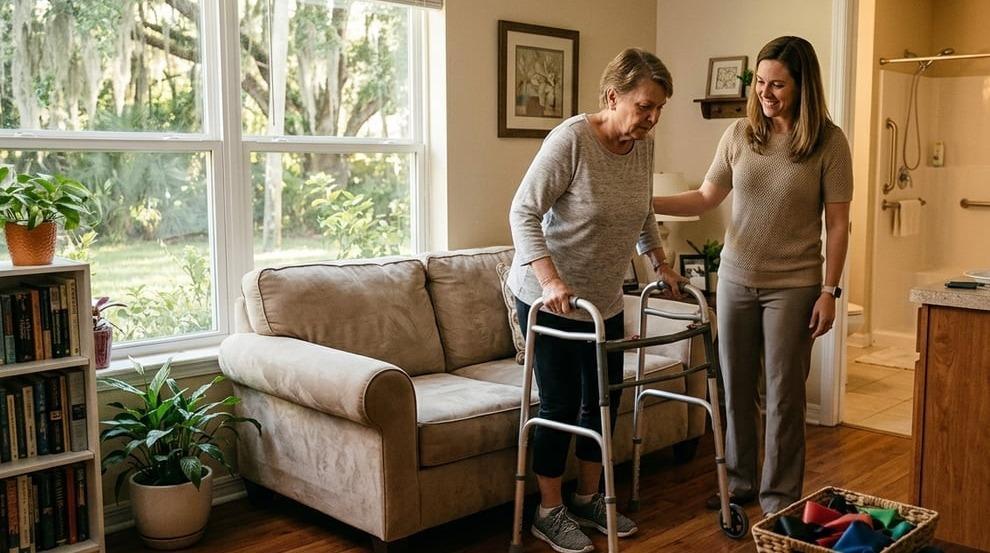
Physical therapy builds strength, balance, endurance, transfers, and the mobility needed to get around the house and out in public.
Occupational therapy works on dressing, bathing, meal preparation, and household routines.
Speech therapy addresses communication, memory, attention, problem solving, and other thinking skills that affect independence.
Recreation therapy helps people return to hobbies and social activities and feel comfortable in community settings again.
Medication management keeps daily routines safe and helps people stay on track with treatment.
NeuLife's Supported Living Program is for people who no longer need hospital care but aren't ready to live at home yet. It offers a home-like setting with trained staff available around the clock, independent living skills training, vocational rehabilitation services, recreational activities, and therapeutic outings to places like parks and stores. For some people it's a stepping stone; for others it's a longer-term home.
Because these services are planned around the same goals, therapy stays connected to life after discharge. In practice, that might mean rehearsing bathroom transfers, planning a short trip to a store, or setting up a daily schedule that balances activity and rest.
NeuLife is one of the largest residential post-acute rehabilitation programs in the Southeast. The Mt Dora facility is newly renovated, with upscale, hotel-style patient suites that feel nothing like a sterile hospital floor. For someone spending weeks or months in rehabilitation, that comfort counts for a lot.
NeuLife is accredited by CARF, the Commission on Accreditation of Rehabilitation Facilities. CARF accreditation is voluntary and requires a program to meet the commission's standards for quality and performance, so it gives patients and referral sources an outside measure of how a program is run.
NeuLife is also a sponsor of the Brain Injury Association of America and a partner of the United Spinal Association, two national organizations focused on brain injury and spinal cord injury.
For case managers and other referral professionals, NeuLife can help bridge the gap between progress in a clinical setting and the practical skills a person needs for everyday life after discharge.
Goals depend on the injury, the person's health, and the support available at home, but rehabilitation for community reintegration often works toward:
These are general goals, not guaranteed outcomes, and they look different for everyone. Success might mean finishing a morning routine without help, or it might mean getting through a family outing or explaining needs clearly in public. NeuLife's team builds each care plan around the individual. For care after a brain injury specifically, see NeuLife's brain injury rehabilitation program.
Community reintegration is where rehabilitation starts to show up in everyday life. Every recovery is different, but a structured, individualized program can make the move from facility to home safer and more manageable.
If you're looking at residential post-acute rehabilitation in Mt Dora, FL, or need a referral destination in the Southeast, NeuLife Rehabilitation can help. Call 800-626-3876, visit neuliferehab.com, or schedule a tour to learn about programs for brain injury, spinal cord injury, complex orthopedic injuries, neurological disorders, and Supported Living.
Q: Why is community reintegration hard after a catastrophic injury?
A: Daily life puts many demands on the body and brain at the same time. Even familiar tasks can take strength, balance, memory, judgment, communication, and emotional control.
Q: Does being medically stable mean someone is ready to function independently at home?
A: Not always. Medical stability is one part of readiness. Many people also need structured rehabilitation to practice real-life skills, adapt to new limitations, and build confidence before or after going home.
Q: How do therapies work together during this transition?
A: Physical therapy, occupational therapy, speech therapy, recreation therapy, and medication management each cover a different part of independence. When they're coordinated around shared goals, people can apply what they've gained to daily routines and community life.
Q: Who can benefit from this kind of rehabilitation approach?
A: Adults recovering from traumatic brain injury, spinal cord injury, complex orthopedic injuries, stroke, and other neurological conditions may benefit, especially when they need support between medical recovery and daily living.
Q: Can NeuLife tell me what level of progress to expect?
A: Individual outcomes vary. The best next step is to talk with NeuLife's clinical or admissions team about the person's condition, goals, and support needs.
Medical disclaimer: This article is for informational purposes only and does not replace individualized medical or rehabilitation guidance. Outcomes vary based on each person's condition, health, and participation in treatment.

We know that choosing the next step in your recovery from a catastrophic illness or injury is complex. Together, we can help you take the next step.
Contact us with any questions today.